





Silicone edge graphics (SEG) are often marketed as a premium display solution, so when a finished graphic looks dull, uneven, or poorly fitted, the first assumption is usually bad design. In practice, that assumption is wrong more often than not. Most SEG failures are not creative problems—they are production problems.
Silicone edge graphics printing is unforgiving. Fabric choice, printing method, color handling, and edge finishing all directly affect the final result once the graphic is stretched into a frame. Even excellent design work can be undermined by the wrong material or a rushed production process.
Understanding what actually affects print quality helps buyers ask better questions before ordering. This article breaks down the technical factors that determine whether SEG graphics look crisp and professional—or disappoint on install day.
Fabric Types and How They Impact Print Results
Fabric is the foundation of silicone edge graphics printing, and not all polyester fabrics perform the same. Differences in weave, weight, coating, and stretch characteristics can significantly affect image quality—even when materials are described similarly by suppliers.
Stretch fabrics are commonly used because they help graphics fit tightly into frames. The trade-off is sharpness. As fabric stretches, fine details soften and text edges lose definition, especially on large graphics viewed up close. Excessive stretch also increases the risk of uneven tension.
Low-stretch or non-stretch polyester fabrics preserve detail and edge clarity far better. They hold printed detail more accurately and maintain consistent appearance over time, but they require precise sizing and professional finishing.
Fabric coatings also matter. Coated fabrics typically produce richer blacks, smoother gradients, and better color saturation. From an experience standpoint, professional SEG printers choose fabric based on frame size, lighting, and viewing distance—not price alone.
Printing Methods Used for SEG Graphics
The two primary printing methods used in silicone edge graphics printing are dye-sublimation and UV printing on fabric. Each produces different visual and long-term performance results.
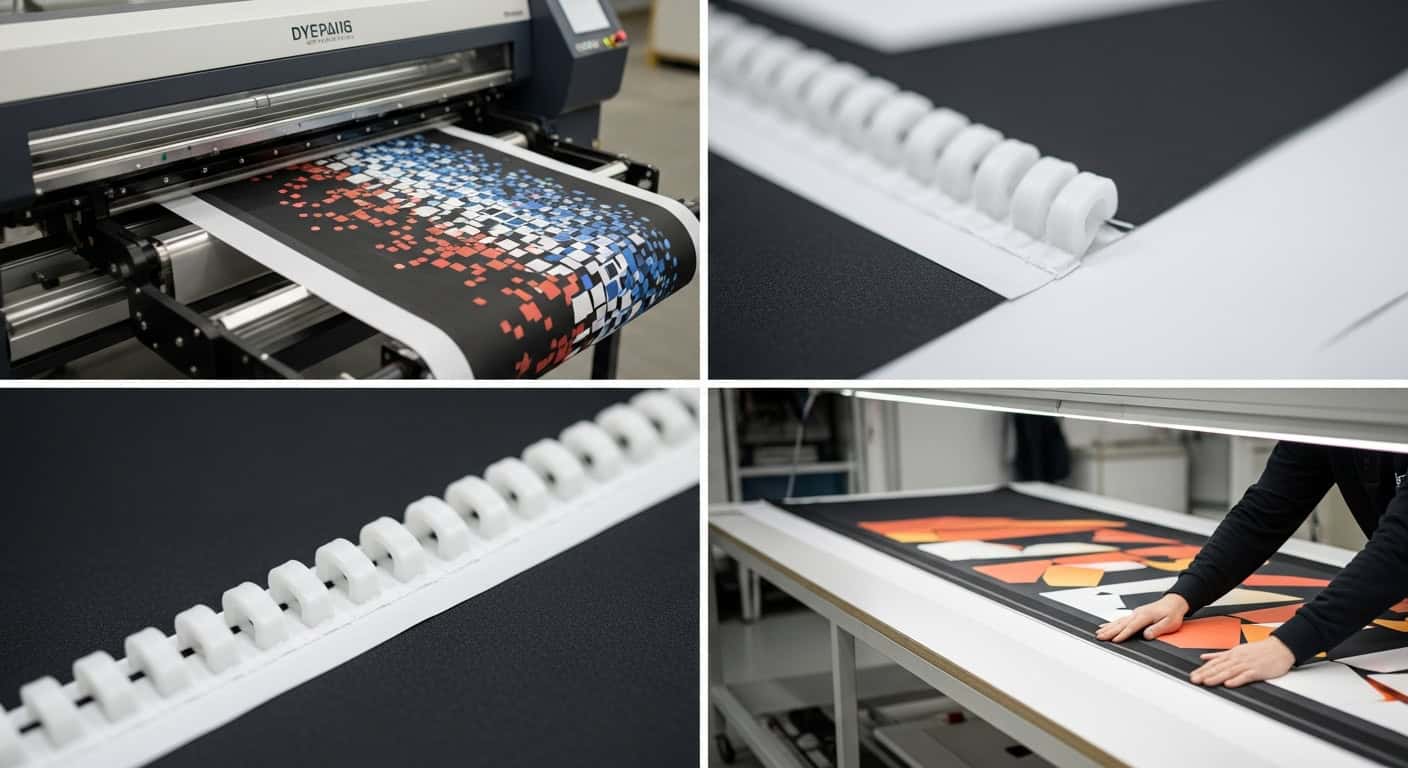
Dye-sublimation printing is the industry standard. Heat converts ink into gas, bonding it directly with polyester fibers. This produces smooth gradients, deep saturation, and a soft fabric feel. Because the ink becomes part of the fabric, it will not crack or peel under repeated tension.
UV printing on fabric deposits ink on the surface. It can deliver sharper fine detail but often results in stiffer fabric and increased risk of cracking when the graphic is stretched multiple times.
For most interior SEG applications, dye-sublimation provides superior durability and visual consistency.
Color Accuracy and Consistency Across Large Graphics
Color accuracy is one of the most challenging aspects of silicone edge graphics printing, especially at large scale. Matching brand colors on fabric is inherently more complex than on rigid substrates.
Fabric absorbs dye differently depending on weave, coating, and heat exposure, leading to subtle shifts in hue and saturation. Large graphics introduce another challenge: panel-to-panel consistency. Even small calibration differences become visible once panels are installed side by side.
Lighting further affects perception. Backlit SEG graphics appear brighter and more saturated than front-lit graphics using the same file.
Professional printers manage these variables through color profiling, controlled production environments, and test prints. Noticeable inconsistencies usually indicate process issues—not unavoidable fabric behavior.
Silicone Beading and Edge Finishing Quality
Even perfectly printed SEG graphics can fail if edge finishing is poor. Silicone beading is structural, not cosmetic.
The silicone bead must be inserted evenly, at consistent depth, and under uniform tension. Poor beading leads to edges creeping out of frames, corners pulling loose, and uneven surface tension.
Low-quality finishing often appears as twisted beads, inconsistent stitching, or silicone separating from fabric over time. These issues typically emerge after installation or removal.
From a production-floor perspective, beading quality is one of the strongest indicators of SEG expertise. Specialized SEG printers invest heavily in trained operators, equipment, and inspection processes.












 5101 Commerce Dr., Baldwin Park, CA 91706
 ExhibitorLive 2026 , Mar 30-April 1, Tampa , FL , Booth #237