








Introduction: Why Fabric Displays Fail Prematurely
Fabric graphic displays are marketed as durable, flexible, and easy to maintain—yet many fail far earlier than expected. Sagging fabric, curled edges, graphics that slowly creep out of the frame, or corners that never quite sit flat are common complaints. These issues are often blamed on poor printing or low-quality fabric. In practice, that diagnosis is usually wrong.
Most premature failures are structural. The fabric is behaving exactly as fabric does under uneven tension and repeated handling. The real problem is the frame system holding it in place. Frames that lose rigidity, apply uneven pressure, or overstress edges accelerate wear that no fabric upgrade can solve.
This is where snap in frames enter the conversation—not as a marketing upgrade, but as a mechanical solution. By changing how fabric is retained and tensioned, snap in frames address root causes of long-term performance loss rather than masking symptoms.
How Fabric Graphics Are Held in Place
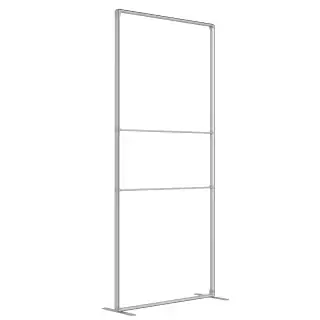
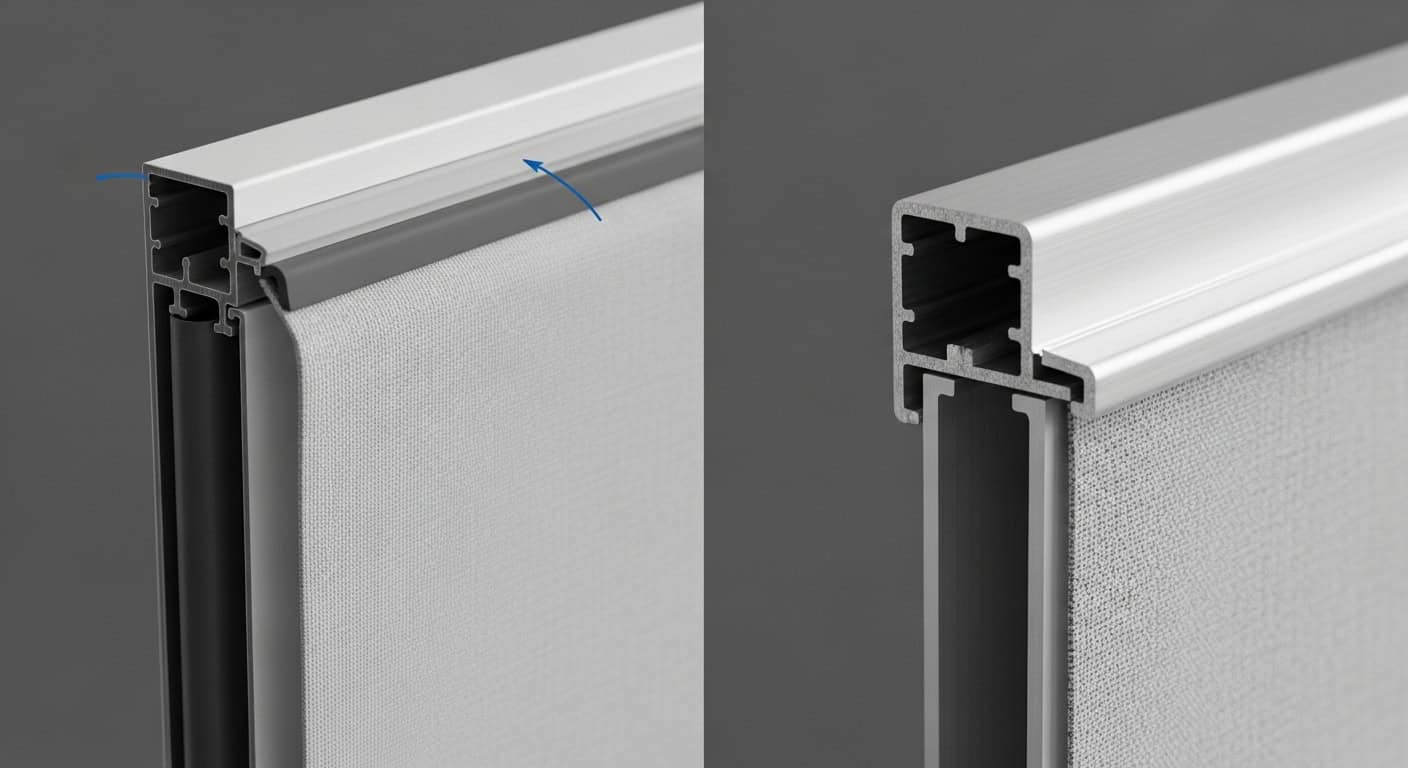
Most fabric graphic systems rely on tension to create a smooth visual surface. Whether used in SEG displays or other frames for fabric, the principle is the same: the fabric is slightly undersized, stretched into a frame channel, and held under constant outward force.
The frame channel determines how evenly that tension is distributed. In traditional fixed aluminum systems, the silicone edge graphic is forced into a rigid groove. On day one, this often looks flawless.
Over time, stress concentrates at predictable points—corners, long unsupported spans, and areas where channel geometry varies. Temperature changes, vibration, and repeated graphic swaps compound the problem. Silicone beads stretch unevenly, fabric fibers fatigue, and edges begin to curl or loosen.
The takeaway is simple: fabric graphics rarely fail on their own. They fail where frame design creates stress faster than materials can tolerate.
What Makes Snap-In Frames Structurally Different
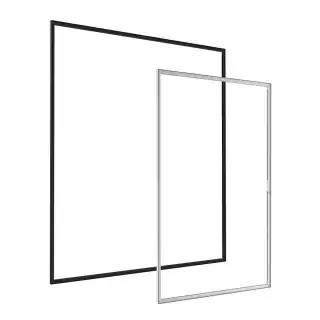
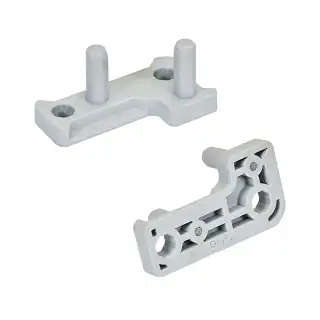
Snap in frames change the retention method, not just the installation experience. Instead of forcing the silicone edge into a fixed, unforgiving channel, snap-in systems use a flexible or mechanically locking component that secures the graphic with controlled, distributed pressure.
This design delivers three structural advantages. First, it provides uniform engagement along the entire edge rather than relying on friction at isolated points. Second, it reduces point loading at corners and transitions. Third, it compensates for minor frame or wall irregularities that would otherwise distort fabric tension.
Unlike rigid aluminum channels, snap-in mechanisms can absorb small movements caused by temperature shifts or building vibration without transferring that movement directly into the fabric edge.
From an installation perspective, the difference is clear: more predictable seating, fewer rework areas, and less risk of over-stretching one side to make another fit.
Impact on Silicone Edge Graphics Longevity
Silicone edge graphics almost always fail at the edge before the print itself degrades. Beads stretch, compress, and relax repeatedly during installation, removal, and environmental change. Traditional rigid channels concentrate that stress at insertion points and corners.
Snap in frames reduce peak stress by supporting the silicone bead rather than wedging it. Retention forces are spread more evenly, slowing long-term deformation.
In real installations, this shows up during reuse. Graphics removed from snap-in frames are far more likely to reinstall cleanly without edge distortion. With fixed channels, repeated swaps often result in beads that no longer seat consistently, forcing early reprints.
Reduced friction during removal also lowers the risk of nicks, tears, and stretched sections—directly reducing replacement costs over time.
Installation Consistency Across Multiple Locations
For multi-location brand rollouts, consistency matters as much as appearance. With rigid frames, installer technique heavily influences results. One site looks perfect; another develops edge waves within weeks.
Snap in frames reduce installer variability by mechanically controlling engagement. Outcomes depend less on individual strength or technique, which becomes critical at scale.
Standardized installs lead to fewer callbacks and less rework. Frames seat graphics the same way across locations, reducing hidden maintenance costs.
The primary benefit here is predictability—not speed. Consistent long-term performance allows realistic maintenance planning instead of reactive fixes.
Maintenance and Graphic Change Efficiency
Fabric systems are often chosen for ease of updates. That promise fails when frames damage graphics during removal or require excessive force to reseat edges.
Snap in frames are designed for repeat access. Removal requires less force, reducing the risk of tearing fabric or stretching silicone beads. Reinsertion is controlled, minimizing misalignment and uneven tension.
Maintenance teams save time with fewer failed attempts and less cleanup. In environments with frequent updates—retail, corporate branding, seasonal displays—these efficiencies compound.
More importantly, reduced handling stress preserves graphic quality across multiple change cycles.
Situations Where Snap-In Frames Are Not Necessary
Snap in frames are not a universal solution. In low-change environments where graphics are installed once and left untouched, their benefits may never be realized.
Budget-limited or temporary projects may prioritize upfront cost over long-term performance. In these cases, simpler frame systems can be appropriate.
Permanent graphics that will never be removed or updated rarely justify snap-in mechanisms. A well-built fixed channel frame can perform adequately.
Responsible specification includes knowing when not to use snap in frames.
Practical Buying Advice from Real Installations
When evaluating snap in frames, prioritize construction quality. Look for rigid aluminum profiles, tight tolerances, and snap mechanisms that engage consistently along the full perimeter.
Ask suppliers:
- How many graphic change cycles is the system designed to handle?
- Is the snap component replaceable if it wears?
- What silicone bead sizes are compatible?
- How does the system compensate for wall irregularities?
Compatibility matters. Confirm bead size, fabric thickness, and tension requirements before committing. Always request real installation references—performance over time is the real proof.












 5101 Commerce Dr., Baldwin Park, CA 91706
 ExhibitorLive 2026 , Mar 30-April 1, Tampa , FL , Booth #237