








The Real Meaning of “Custom”
“Custom” is one of the most abused words in display hardware. In most cases, it doesn’t mean engineered-to-order—it means a standard product cut to size. That distinction matters, because buyers often pay a premium expecting performance gains that never materialize. The real question isn’t whether a frame is custom, but whether customization actually solves a real constraint.
Standard SEG frames dominate because they’re inexpensive, predictable, and fast to deploy. Custom snap frames enter the conversation only when those defaults fail—architecturally, visually, or mechanically. This article strips away marketing language and examines what actually changes between standard SEG systems and truly custom snap frame solutions, and when the extra cost is justified.
How Standard SEG Frames Are Typically Designed
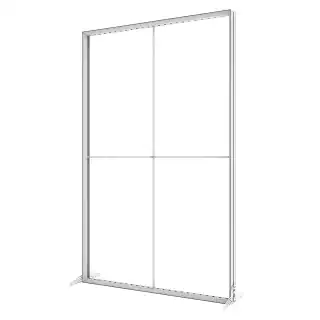
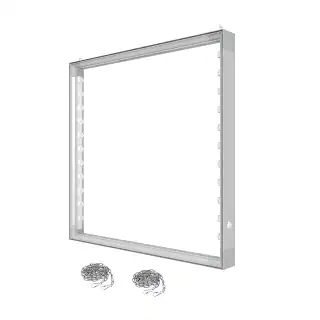
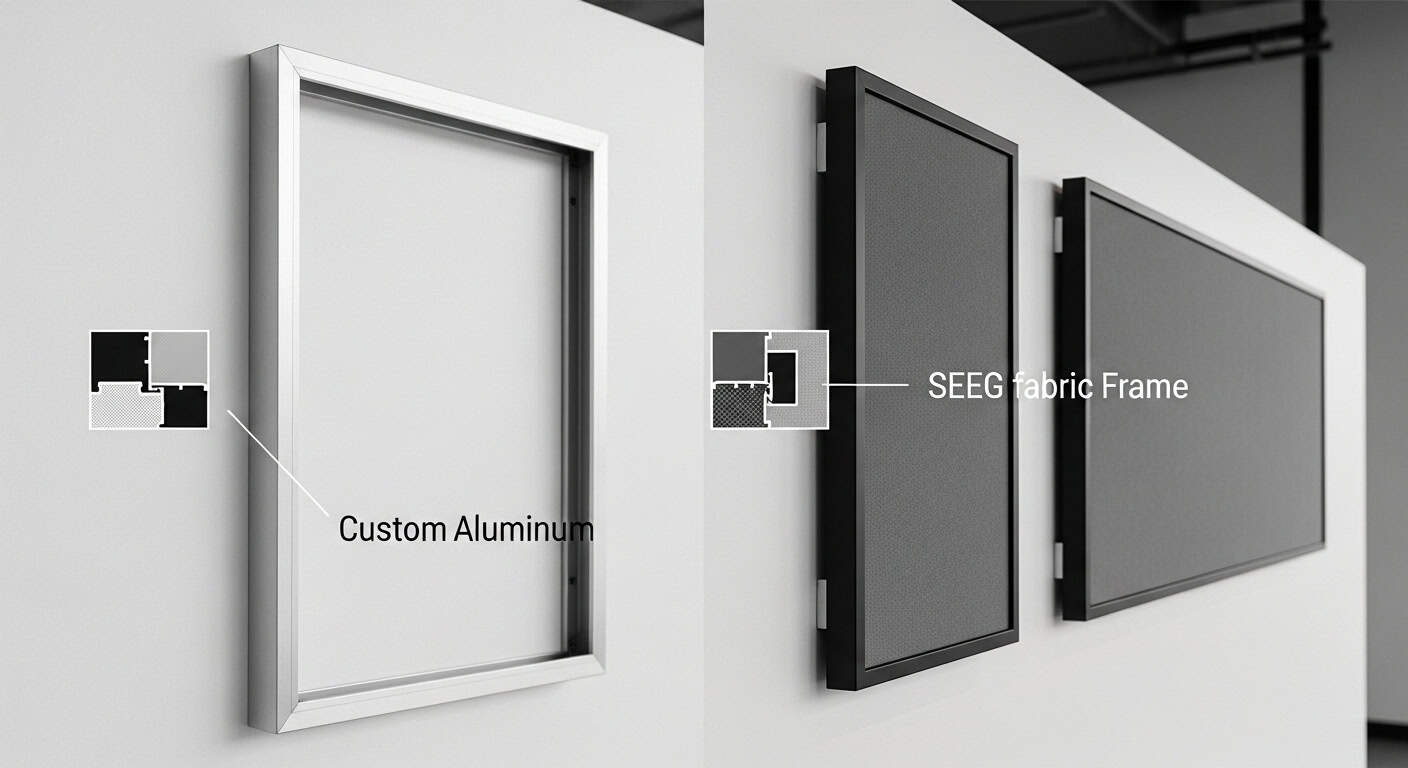
Standard SEG frames are engineered for manufacturing efficiency, not edge cases. Most rely on a limited catalog of aluminum extrusion profiles with fixed depths, fixed channel geometries, and standardized corner solutions. These profiles are produced at scale, stocked in long lengths, and cut to size, which keeps costs low and availability high.
Fabric graphics are equally standardized. Silicone edge diameters, stretch expectations, and corner radii assume “normal” conditions. Walls are assumed flat. Mounting surfaces are assumed square. Lighting—if included—is typically generic perimeter LED.
Limitations appear quickly in real installations. Uneven walls cause waviness. Shallow profiles limit lighting uniformity. Tight radii or unusual aspect ratios stress silicone edges. These are not defects—they are trade-offs. When a project fits the assumptions, standard SEG frames perform extremely well.
What Changes in a Custom Snap Frame System
A true custom snap frame system is about control, not decoration. The most significant change is profile engineering. Depth can be increased or reduced to support lighting uniformity, structural stiffness, or imperfect wall conditions. Face widths can be adjusted for visibility or concealment, directly affecting performance.
Channel tolerances also change. Standard systems rely on forgiving tolerances to support mass production. Custom snap frames allow tighter tolerances, improving graphic alignment and reducing long-term micro-movement—especially in high-traffic environments.
Mounting is where customization becomes unavoidable. Curved walls, uneven substrates, concealed fasteners, magnetic attachment, or seismic requirements cannot be cleanly solved with off-the-shelf frames. Custom snap frames allow mounting logic to be engineered as part of the system, not improvised during installation.
Performance Differences in Real Installations
Performance differences are immediately visible in the field. Fit and finish improve first. Custom snap frames sit flatter, align cleaner at corners, and maintain consistent reveal gaps. These details matter in environments where quality is closely scrutinized.
Tension consistency is another major difference. SEG frames depend on fabric elasticity and silicone edge tolerance. Snap frames control tension mechanically. This reduces graphic stretch, extends graphic lifespan, and minimizes reprints—especially in temperature-variable spaces.
Installer feedback is blunt. Standard SEG frames are faster to install when conditions are ideal. Custom snap frames take longer upfront but are more predictable when conditions aren’t. Fewer shims, fewer site fixes, and fewer compromises translate to lower long-term maintenance.
Lead Time, Scalability, and Cost Trade-Offs
Standard SEG frames win decisively on lead time. Profiles are stocked, fabrication is routine, and suppliers can scale quickly. For large multi-location rollouts with consistent conditions, this efficiency is difficult to beat.
Custom snap frames require engineering time, validation, and smaller production runs. Lead times increase. Unit costs rise. That is the cost of specificity.
Scalability depends on discipline. If a custom system is engineered once and repeated consistently, costs normalize with volume. If every location introduces unique constraints, costs escalate rapidly.
True budget impact includes installation labor, graphic replacement frequency, and ongoing maintenance—not just frame price.
When Custom Frames Are Justified
Custom snap frames are justified when constraints are non-negotiable. Architectural environments with uneven walls, curves, or integrated millwork often force customization. Attempting to adapt a standard frame usually produces visible compromises.
High-visibility brand spaces such as flagship stores, corporate lobbies, and museums benefit from tighter tolerances and refined detailing.
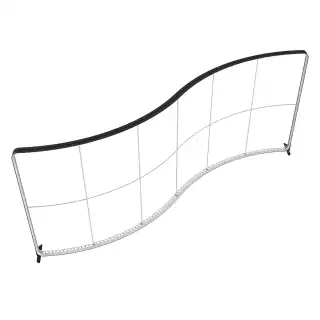
Integrated lighting, curved graphics, or mixed-material installations also exceed standard SEG capabilities. These systems require coordination between frame geometry, lighting, and mounting that cannot be reliably retrofitted.
If failure would be expensive—financially or reputationally—customization is risk management, not indulgence.
When Standard Frames Are the Smarter Choice
Standard SEG frames are the smarter choice more often than people admit. Fast deployments, pop-up environments, trade shows, and budget-controlled projects rarely benefit from customization.
If walls are flat, lighting is basic, and graphics are temporary, a standard system will perform exactly as intended. Paying more will not meaningfully improve results.
Large rollouts with aggressive timelines also favor standardization. Consistency across locations often matters more than perfection at a single site.
The rule is simple: if you cannot clearly articulate the constraint that demands customization, you probably do not need it.










 5101 Commerce Dr., Baldwin Park, CA 91706
 ExhibitorLive 2026 , Mar 30-April 1, Tampa , FL , Booth #237