


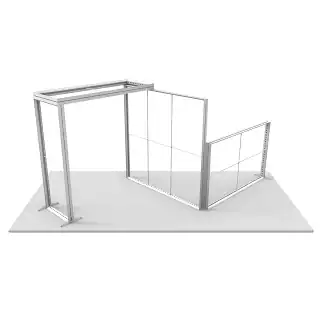


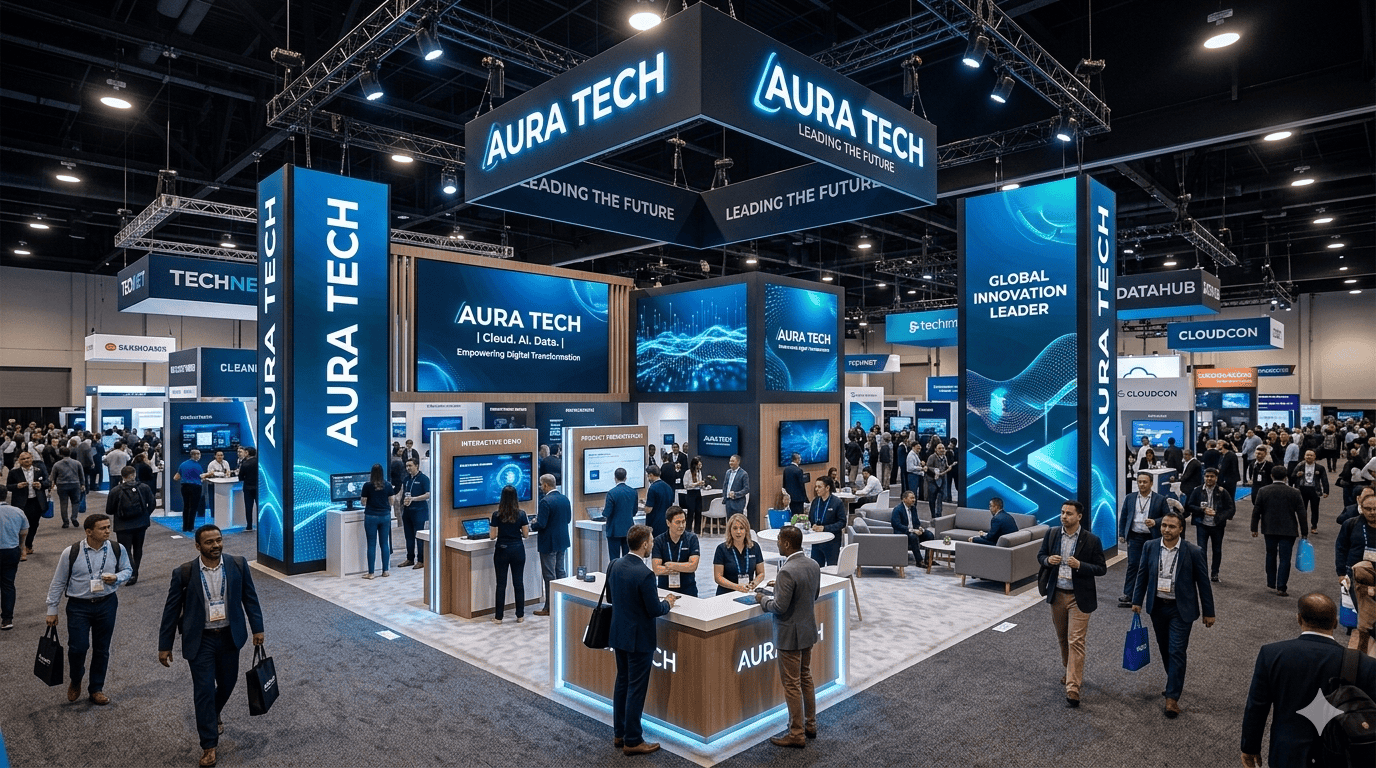
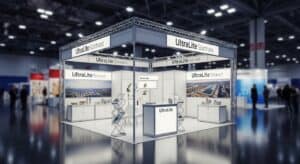
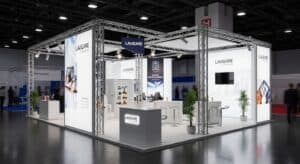
Booth layouts for big exhibitions require strategic planning that goes far beyond aesthetics. Large exhibition spaces provide more square footage, but they also introduce complexity. Without defined zones, traffic structure, and behavioral flow, bigger booths often underperform smaller, well-designed ones.
Engagement does not increase automatically with size. It increases when layout design controls movement, encourages interaction, and separates casual visitors from serious prospects. The objective is not to fill space. The objective is to engineer high-quality engagement.
1. Understand the Psychology of Large Booth Spaces
Big exhibition booths often operate as island or peninsula layouts. Visitors can approach from multiple directions. This creates opportunity, but it also creates unpredictability.
Booth layouts for big exhibitions must account for:
- Multiple entry points
- 360-degree visibility
- Noise from surrounding exhibitors
- Unstructured crowd flow
Without layout discipline, staff conversations overlap and valuable leads are lost in chaos.
2. Define Clear Entry and Attraction Zones
Large booths must attract visitors from all sides. However, not every edge should function the same way.
Effective structure includes:
- Primary attraction edge with bold headline visibility.
- Secondary access points that remain open but less dominant.
- Visual anchors that draw visitors toward the center.
Visitors need visual direction. Open space without guidance reduces engagement.
3. Segment the Booth into Engagement Layers
Booth layouts for big exhibitions should function in layers. Segmentation creates control.
Recommended layered approach:
- Front layer for quick interactions.
- Middle layer for demonstrations and product education.
- Rear or inner layer for conversion conversations.
This progression mirrors buyer behavior. Casual visitors stay near the perimeter. High-intent prospects move deeper.
4. Use Height to Establish Visual Dominance
In large exhibition halls, horizontal width is common. Vertical presence is what differentiates serious exhibitors.
Design strategies include:
- Suspended hanging signs.
- Multi-level structures.
- Elevated LED screens.
- Lighting towers that extend above competitors.
Height increases visibility across crowded aisles and reinforces authority.
5. Prevent Dead Zones with Intentional Traffic Flow
Dead zones are common in oversized booths. Corners and rear sections often receive minimal attention.
To prevent underused space:
- Position interactive elements toward low-traffic corners.
- Use angled structures to guide movement inward.
- Place staff evenly across the layout.
Movement must feel natural, not forced.
6. Separate Demonstration Areas from Conversation Spaces
Noise is amplified in large exhibitions. Without separation, demo areas interrupt sales discussions.
Effective booth layouts for big exhibitions incorporate:
- Dedicated demo zones with controlled sound.
- Semi-private discussion tables.
- Clear transition from public to private engagement.
Structured separation increases conversion efficiency.
7. Design Lighting as a Structural Element
Large exhibition halls often have flat overhead lighting. To stand out, lighting must be layered and directional.
Consider:
- Ambient lighting for overall visibility.
- Accent lighting for focal points.
- Task lighting for product showcases.
Contrast draws attention. Even lighting creates invisibility.
8. Control Staff Positioning Strategically
More square footage requires more staff discipline. Without defined roles, teams cluster in high-traffic areas and neglect other sections.
Effective deployment includes:
- Perimeter greeters to attract traffic.
- Specialists in demo zones.
- Senior representatives in conversion areas.
Role clarity prevents internal confusion.
9. Optimize Branding for Distance and Immersion
Booth layouts for big exhibitions must communicate clearly at two distances: long-range visibility and close-range detail.
Design hierarchy should include:
- Large readable headlines at height.
- Mid-level messaging for engagement.
- Detailed content only within demo areas.
Overloading graphics reduces clarity. Structured hierarchy increases recall.
10. Measure Engagement Beyond Foot Traffic
Large booths attract high foot traffic. However, raw numbers do not indicate success.
Track meaningful metrics:
- Average dwell time.
- Engagement depth per visitor.
- Qualified lead ratio.
- Post-show conversion value.
Performance must be measured strategically.









 5101 Commerce Dr., Baldwin Park, CA 91706
 ExhibitorLive 2026 , Mar 30-April 1, Tampa , FL , Booth #237