


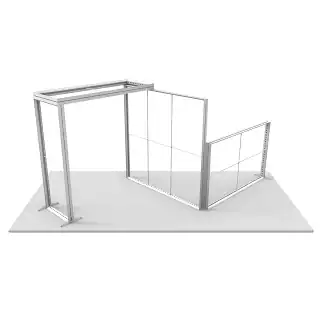
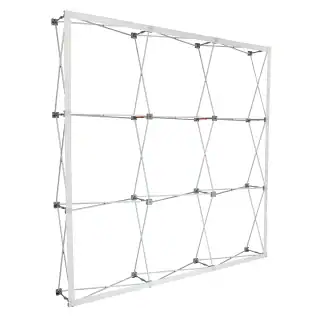
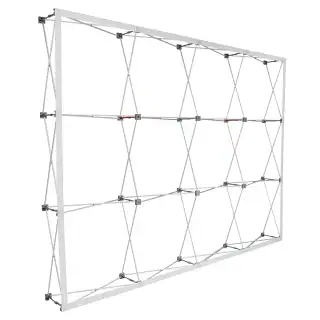
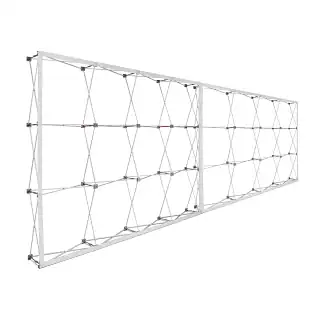
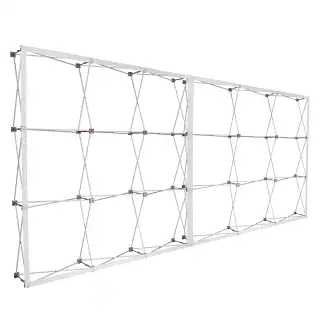
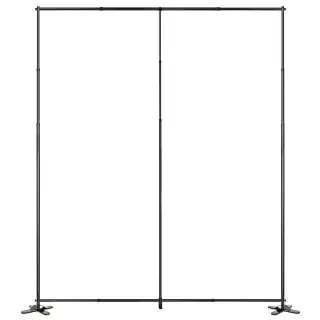
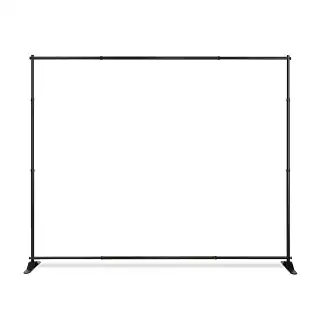
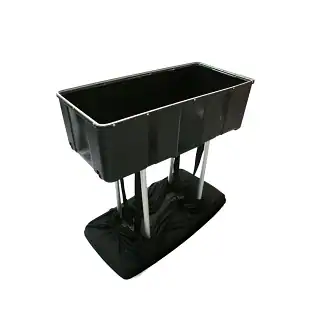
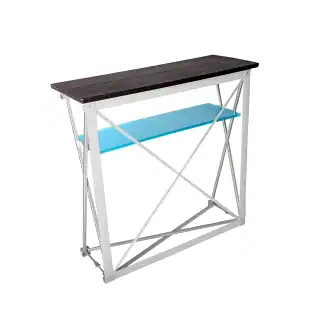
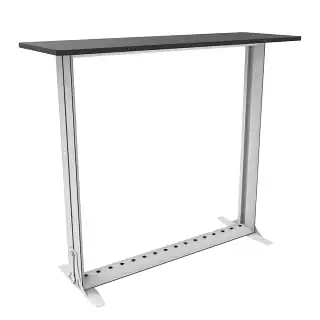
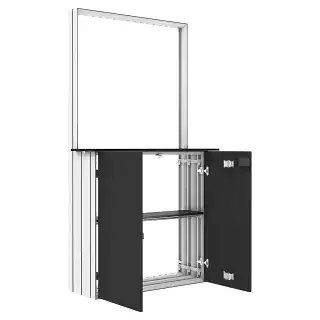
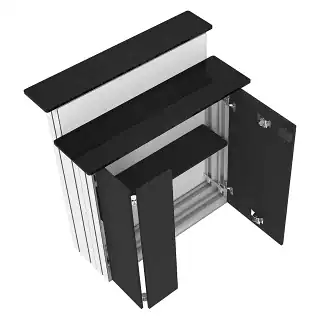

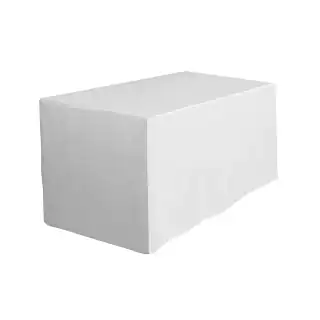
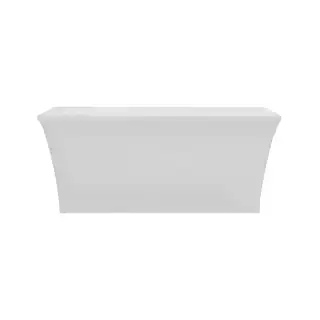
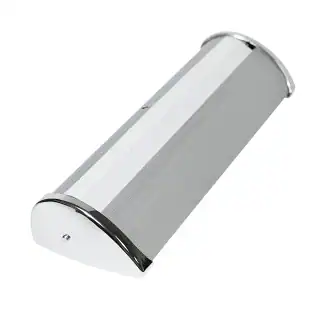
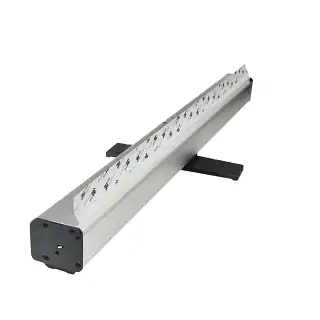
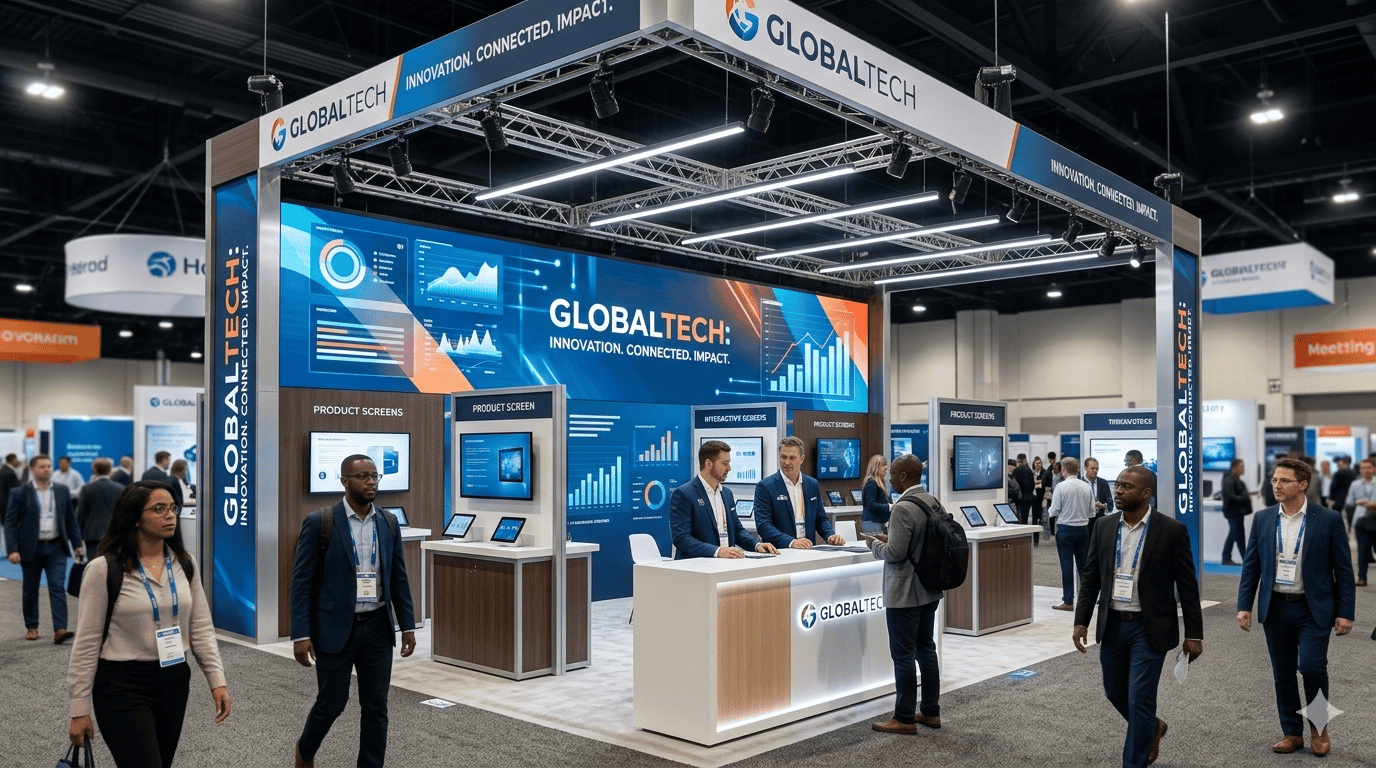
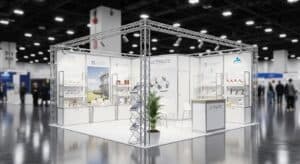
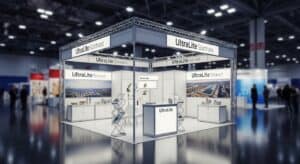
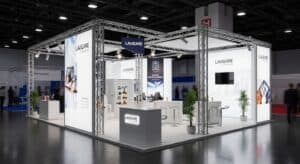
A 10×20 Trade Show Booth offers the ideal balance between compact efficiency and expanded engagement space. With 200 square feet available, exhibitors gain more flexibility than a 10×10 layout while avoiding the complexity of a large island structure. However, achieving balanced visibility and controlled space usage requires intentional design decisions.
When structured properly, a 10×20 layout creates strong aisle presence, layered interaction zones, and improved lead qualification opportunities. Without strategy, it becomes an oversized inline booth with wasted potential.
1. Understand the Strategic Advantage of a 10×20 Layout
A 10×20 Trade Show Booth doubles the width of a standard 10×10, creating greater horizontal exposure along the aisle. This extended frontage increases brand visibility and allows more structured zoning.
The advantages include:
- Increased graphic surface for messaging.
- Space for product demonstration areas.
- Improved traffic capacity without overcrowding.
However, width alone does not create impact. Balance between visibility and functionality is critical.
2. Divide the Booth into Functional Zones
One of the most effective ways to optimize a 10×20 Trade Show Booth is to segment the space clearly. Zoning prevents congestion and improves behavioral flow.
Use a three-part structure:
- Front zone for attraction and greeting.
- Center zone for product demonstration.
- Rear zone for deeper discussion or lead capture.
This layout supports progressive engagement and prevents visitors from lingering only at the edge.
3. Maintain Balanced Visual Hierarchy
Balanced visibility requires clear hierarchy. Overloading graphics across 20 feet can overwhelm visitors.
Design hierarchy should include:
- Primary headline positioned at eye level.
- Logo placed high for long-distance recognition.
- Supporting text kept minimal and readable.
Clarity improves recall. Excess detail reduces impact.
4. Use Vertical Elements to Strengthen Presence
Although width is extended, height remains a powerful visibility tool. A strong backwall creates authority.
Consider:
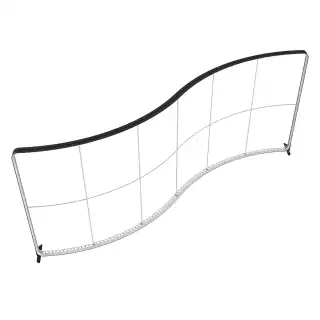
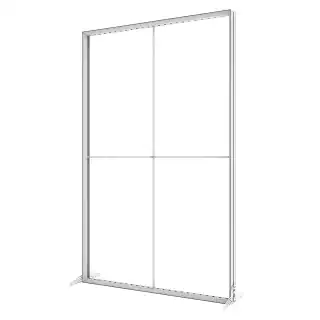
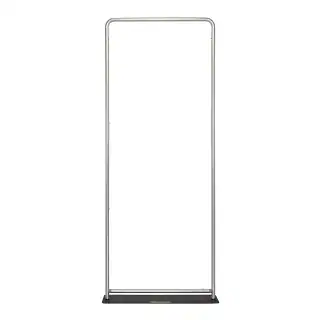
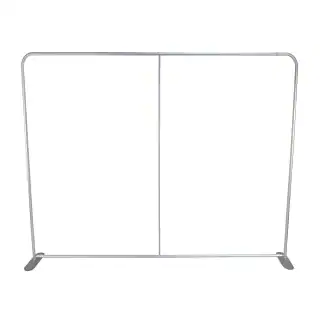
- Tall fabric backwalls.
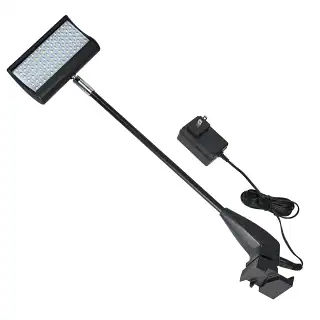
- Illuminated logo panels.
- Integrated LED monitors.
Vertical emphasis prevents the booth from appearing flat within a crowded exhibition hall.
5. Control Traffic Flow Intentionally
Traffic congestion can occur quickly in mid-sized booths. Therefore, layout must guide movement rather than block it.
To maintain balance:
- Keep the front open and accessible.
- Avoid placing large counters across the entire frontage.
- Offset demo stations slightly from centerline.
Visitors should feel invited inward, not obstructed.
6. Separate Engagement and Conversion Spaces
A 10×20 Trade Show Booth provides enough depth to distinguish between interaction and private discussion.
Effective structure includes:
- Front engagement for quick conversations.
- Central demo area for product education.
- Rear section with high-top table for qualified leads.
This separation increases lead quality and reduces interruption during important discussions.
7. Use Lighting to Create Depth and Focus
Trade show halls often have uniform overhead lighting. Custom lighting creates contrast and draws attention.
Layer lighting strategically:
- Ambient lighting for overall brightness.
- Accent lighting for brand elements.
- Task lighting for product displays.
Contrast improves visual presence without overwhelming the space.
8. Integrate Hidden Storage and Clean Execution
Operational discipline influences brand perception. Visible clutter weakens credibility.
Include:
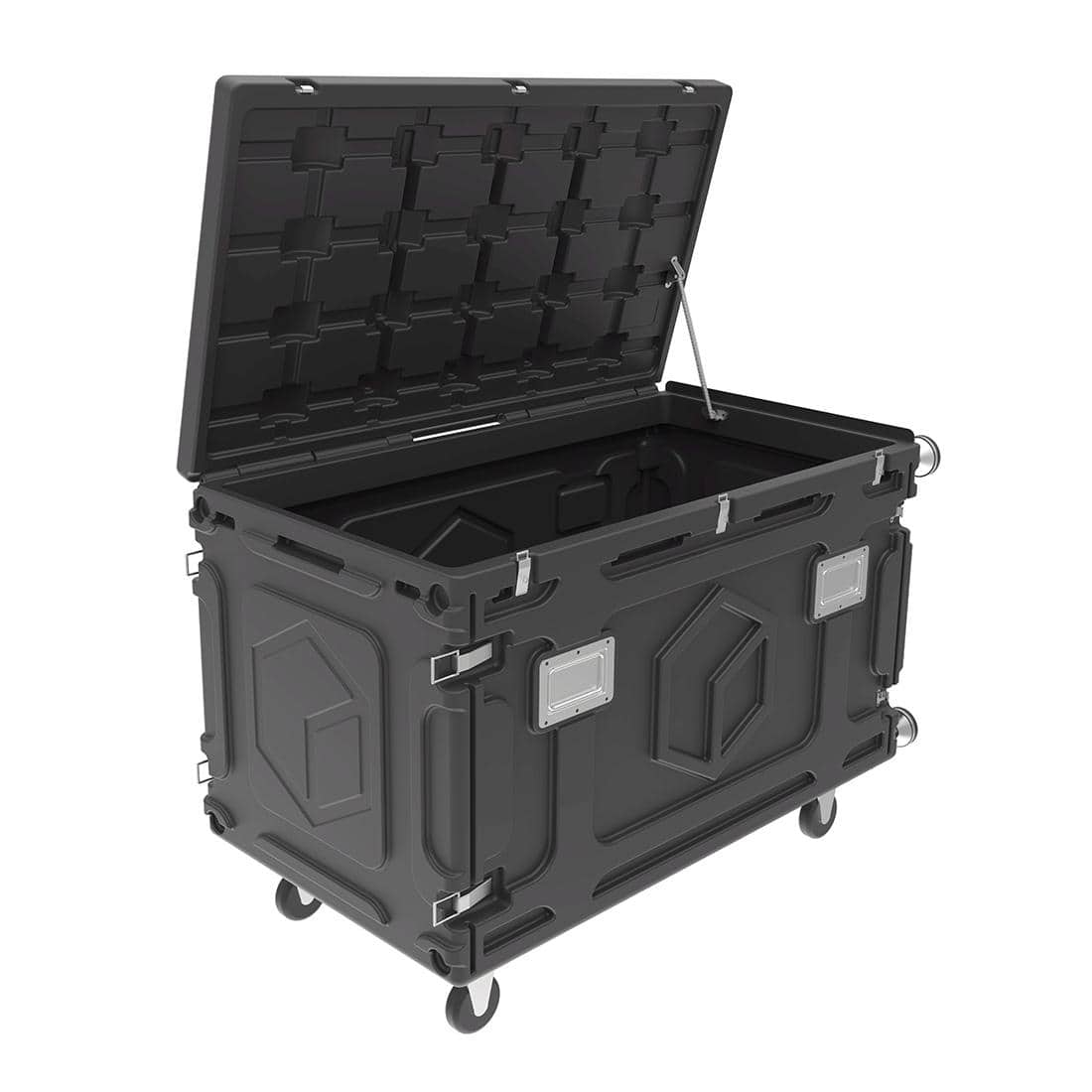
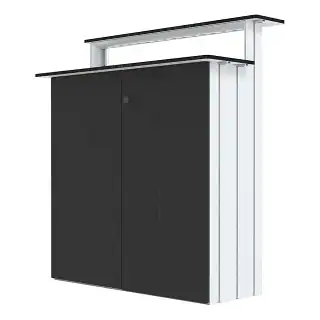
- Concealed storage cabinets.
- Hidden cable management.
- Defined staff positions to prevent crowding.
A clean environment supports professional brand identity.
9. Optimize Messaging for Distance and Proximity
A 10×20 Trade Show Booth must communicate effectively at two levels. From a distance, messaging should be bold and simple. At close range, details should support engagement.
Follow this structure:
- Large, readable headline visible at 15–20 feet.
- Clear supporting value statement.
- Detailed content only within demo zones.
Layered communication enhances clarity and conversion.
10. Measure Booth Performance After the Event
Balanced visibility and space control should translate into measurable results.
Track:
- Dwell time inside the booth.
- Engagement depth per visitor.
- Qualified lead percentage.
- Post-show conversion rate.
Performance data allows refinement for future exhibitions.









 5101 Commerce Dr., Baldwin Park, CA 91706
 ExhibitorLive 2026 , Mar 30-April 1, Tampa , FL , Booth #237